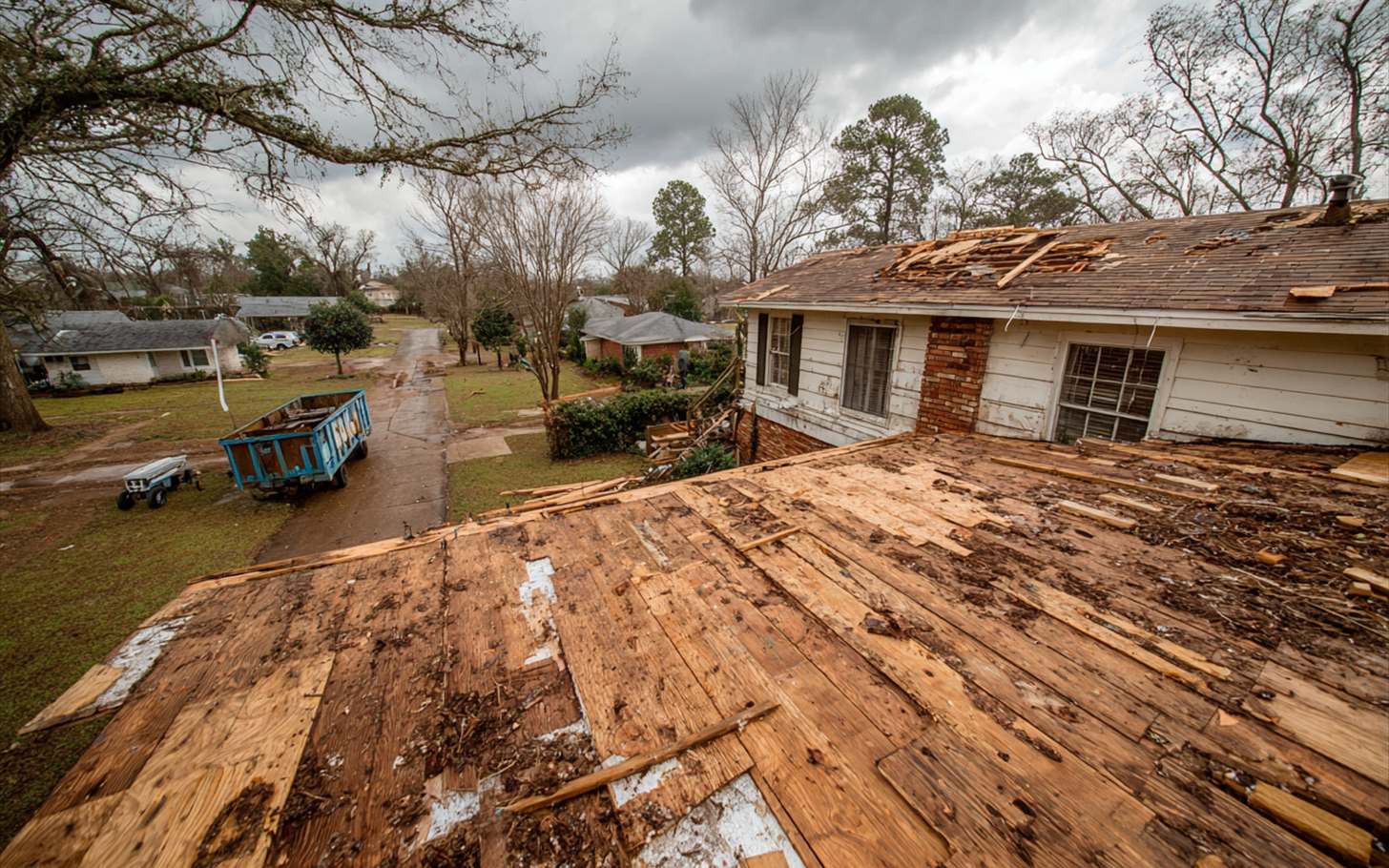
Every shingle on a roof is nailed to the decking, the layer of plywood or oriented strand board that spans the rafters. It's the part owners never see and roofers can't fully judge until the old shingles come off. On older Spring houses, it's also the part most likely to add a surprise to a reroof.
What Decking Is
| Type | Where you find it | Notes |
|---|---|---|
| Plywood | Many houses built through the 1980s | Thin layers of wood glued crosswise; holds nails well |
| Oriented strand board (OSB) | Most houses since the 1990s | Wood strands pressed with resin; swells if it stays wet |
| Plank (board) decking | A few very old houses | Boards with gaps; may need to be covered with new sheathing |
Decking also does structural work: nailed properly to the rafters, it ties the roof together and resists wind uplift. FEMA's guidance on sheathing installation for high-wind areas is summarized here: Building America Solution Center: Roof Sheathing Installation (FEMA).
What Ruins Decking
Water, over time, is almost always the cause. A slow leak at a pipe boot or valley can wet the same patch of decking through dozens of rains before a ceiling stain appears. Poor attic ventilation lets moisture condense on the underside. Overflowing gutters soak the edge of the deck along the eaves. A falling limb can crack it in one blow.
Signs a roofer looks for:
- soft or spongy spots when walking the roof
- sagging between rafters, visible as waves across a slope
- dark, stained or crumbling wood seen from the attic
- delaminated plywood, with layers separating
- swollen OSB edges along the eaves
- nails that pull out with no grip
From the ground: stand at the corner of the house and sight along the roof; dips between rafters show up as wavy lines.
Ask the roofer: "Did you see any soft spots or stains in the attic?"
Decking and a New Roof
Most Spring reroofs replace some decking, a few sheets at the eaves or around old leak spots. On 1960s and 1970s houses in Northampton, Klein and Champion Forest, it can be more. Because no one can count bad sheets before tear-off, a good contract names a price per sheet in advance, and the roofer shows photos of anything replaced. See roof replacement.
| Contract item | Why it matters |
|---|---|
| Price per sheet of decking | Avoids a surprise bill halfway through |
| Photos of replaced sheets | Shows what you paid for |
| Fastening schedule | Correct nails and spacing for wind |
| What happens with plank decking | Overlay with new sheathing, or replace |
Ask the roofer: "If you find bad decking, will you stop and show me before you replace it?"
Can You Roof Over Bad Decking?
No. Shingle makers require a solid, dry deck for their warranty, and shingles nailed into soft wood don't hold in wind. Laying a second layer of shingles over the first hides decking problems instead of fixing them, which is one reason full tear-off is the norm around Spring. More on what fails first in wind: the derecho.
Plywood and OSB in Humid Air
Both plywood and OSB do fine when they stay dry. The difference shows when they get wet repeatedly. Plywood tends to delaminate, its layers separating and bubbling. OSB tends to swell, especially at its edges, and once swollen it doesn't shrink back, which telegraphs through the shingles as ridges along the seams. In Spring's humidity, an attic with poor ventilation can keep the underside of either one damp for much of the summer.
The Attic View
The attic is where an owner, or a roofer, can see decking without tearing anything off. With a flashlight on a dry day, look for:
| What you see | What it may mean |
|---|---|
| Dark rings or streaks on the wood | Past or current leaks |
| Daylight through the boards | Gaps, holes or missing shingles |
| Frost-like white residue or rusty nail tips | Condensation from poor ventilation |
| Sagging between rafters | Wet or weakened decking |
Only go into the attic if it has a floor or safe walkway; stepping between joists can put a foot through the ceiling.
Questions
How thick should roof decking be?
Common residential decking is 7/16 inch OSB or plywood, and thicker in some high-wind designs. Your roofer will match or improve what the house has and what local rules require.
Does insurance pay for decking replaced during a storm claim?
Decking damaged by a covered storm is usually part of the claim. Decking that was already rotted from old leaks is usually not.
Can decking be replaced without a full reroof?
Yes, in a small area during a repair: the shingles over the bad spot come off, the sheet is replaced, and the area is reroofed.
Why did the roofer find more bad decking than expected?
Because much of it can't be seen until the shingles come off. Slow leaks, condensation and old patches often stay hidden for years. A per-sheet price in the contract keeps that surprise fair.
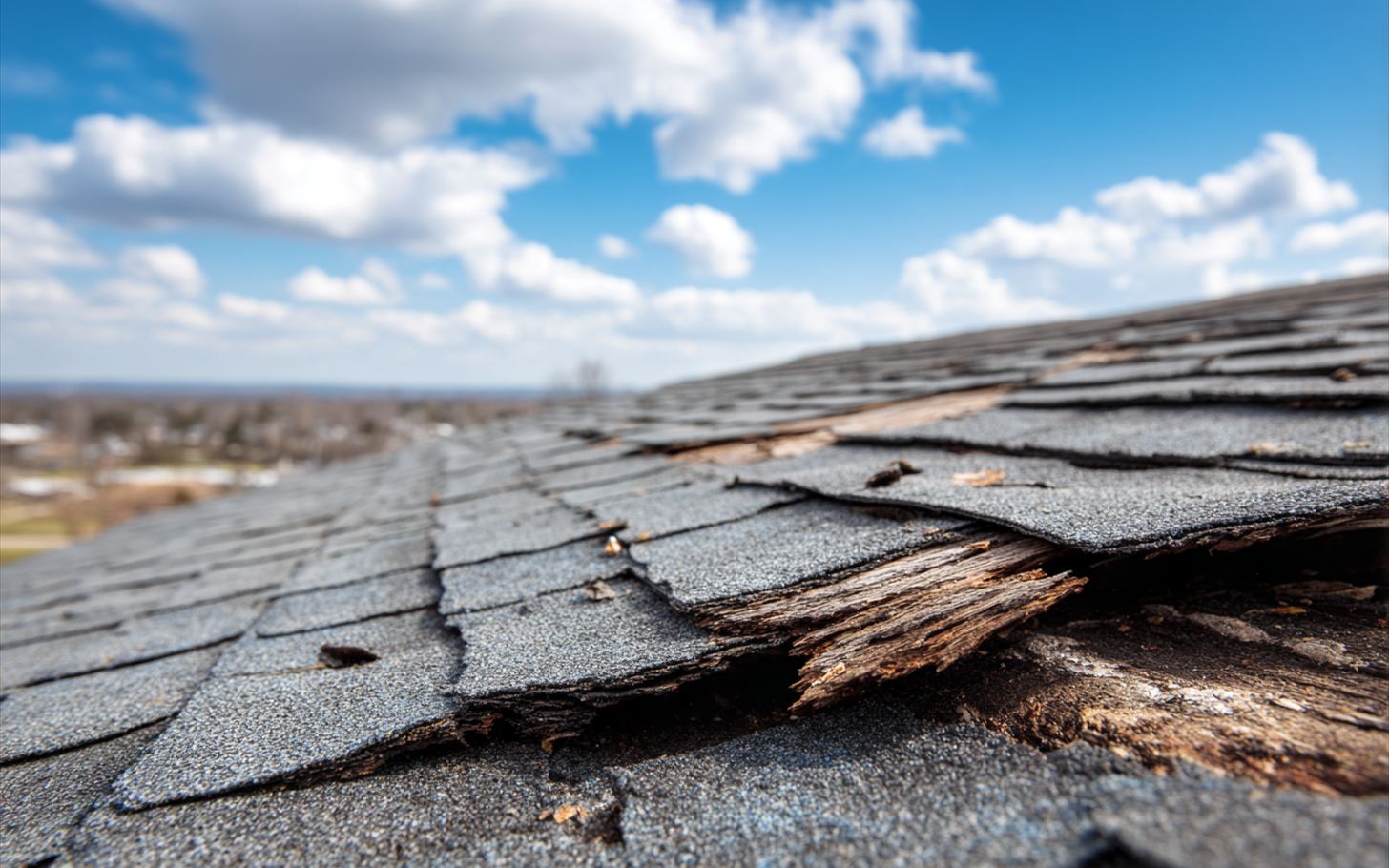
The 2024 Derecho: Wind That Lifted Shingles
Straight winds, broken seal strips and missing tabs.
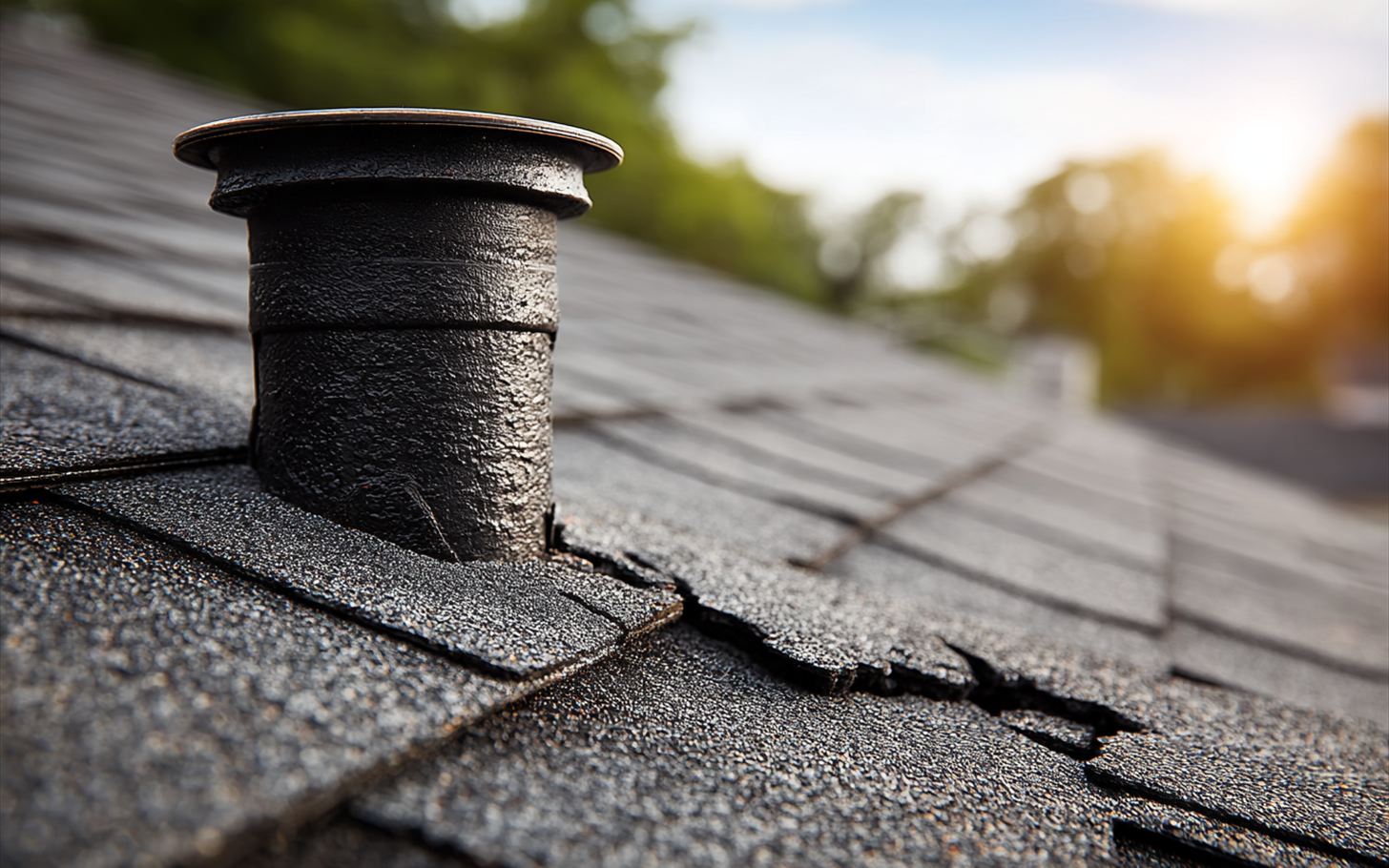
Pipe Boots, Vents and Small Leaks on an Aging Roof
The little parts that fail before the shingles.