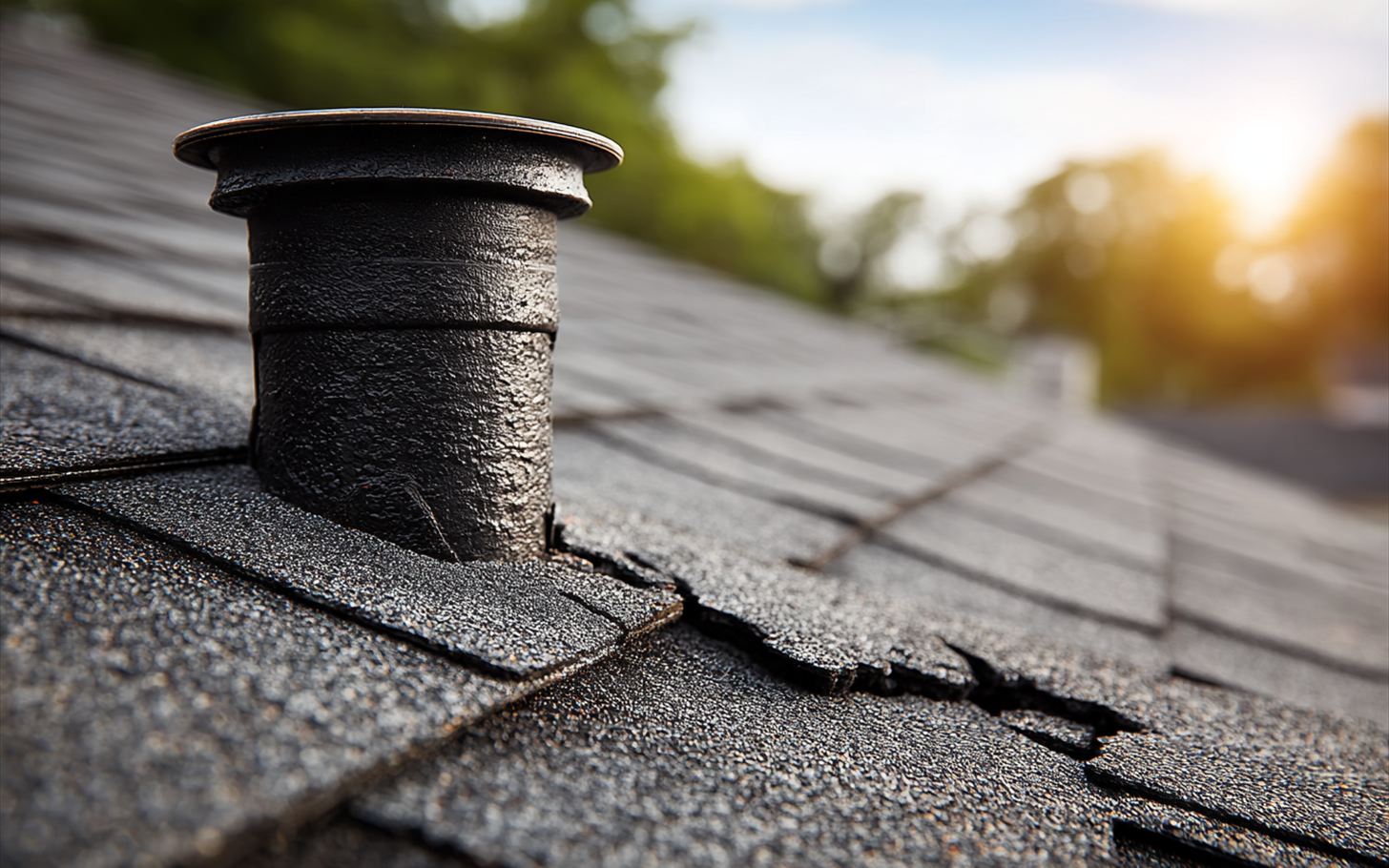
On many Spring roofs, the first leak doesn't come through the shingles at all. It comes around something sticking up through them: a plumbing vent pipe, an attic vent, a turbine, a bathroom exhaust cap. Each one is a hole in the roof sealed by a part that ages faster than the shingles around it.
The Usual Suspects
| Part | What it does | How it fails |
|---|---|---|
| Pipe boot | Rubber collar sealing a plumbing vent pipe | Sun cracks the rubber, often after 8–12 years |
| Box vent | Lets hot attic air out | Seals and nails loosen; hail cracks plastic |
| Turbine | Spinning vent for attic air | Bearings seize; the base rusts or blows off |
| Exhaust cap | Bathroom or kitchen fan outlet | Flap sticks; sealant dries out |
| Ridge vent | Continuous vent along the peak | Wind-driven rain gets under poorly installed ends |
Pipe Boots in the Texas Sun
A pipe boot is a simple part: a metal or plastic flange under the shingles, and a rubber collar hugging the pipe. The rubber faces the sky all day, every day. In Houston's heat and ultraviolet light, it dries, shrinks and cracks, usually on the uphill side where water hits it first. Water then runs down the outside of the pipe, into the attic, and onto the ceiling below, often over a bathroom or a hallway.
The repair is quick: replace the boot, or slip a new collar over the old one. On an older roof with several boots, most roofers replace them all at once.
From the ground: with binoculars, look at the rubber collars around the pipes; cracks and gaps show as dark lines.
Ask the roofer: "Are the other pipe boots the same age as this one?"
Vents and Attic Air
Roof vents exist so the attic can breathe: cool air in through the soffits, hot air out near the top. When a vent leaks, it usually isn't the vent itself but the seal, nails or flashing around it. Turbines, common on older Spring houses, add a moving part that can seize or blow off in a storm, leaving an open hole.
Ventilation also affects how long the shingles last. The Building America Solution Center explains how balanced attic ventilation works: Building America Solution Center: About Attic Ventilation.
| Vent mix | Problem |
|---|---|
| Ridge vent plus turbines | Turbines can pull air from the ridge instead of the soffits |
| Not enough soffit intake | Hot air has nowhere to come from; attic stays hot |
| Exhaust fans venting into the attic | Moist air soaks the decking |
From the ground: count how many kinds of vent are on the roof; more than one exhaust type is worth asking about.
Flashing Around Everything Else
Chimneys, skylights and the walls of second stories all need flashing: metal pieces that lap water over the joint. Step flashing along a wall, counter flashing on a chimney, and the kick-out at the bottom of a wall where it meets the gutter are common leak points on Spring two-stories. A missing kick-out sends water behind the siding instead of into the gutter.
Older Houses, More Parts
Houses in Northampton and older parts of Oak Ridge North often have reused boots and vents from an earlier reroof, while larger houses in Augusta Pines simply have more of them. Either way, these parts are a common reason for a repair visit. See roof repair.
Bathroom Fans and Attic Moisture
A bathroom exhaust fan should send its damp air outside, through a roof cap or a wall vent. On many houses, the duct was never connected, or it slipped off, and the fan blows warm, wet air straight into the attic. In Houston's climate that moisture condenses on the underside of the decking, stains it, and can look exactly like a roof leak from below. A roofer checking a "leak" over a bathroom often finds a loose duct instead.
| Clue in the attic | Points to |
|---|---|
| Wet stain directly around a pipe | Pipe boot |
| Damp patch near a bathroom with no pipe above | Disconnected fan duct |
| Rust on nail tips across a wide area | Condensation from poor ventilation |
| Water trail down a rafter from a vent | Vent seal or flashing |
Collars, Caps and Covers
Not all pipe boots are the same. Basic rubber collars are the cheapest and fail first. Lead boots, folded over the top of the pipe, last much longer but can be chewed by squirrels. Some newer boots use silicone or have replaceable collars. When a roof is replaced, it's worth asking which kind is going on.
Questions
How long do pipe boots last in Spring?
Rubber boots often crack within 8–12 years in Texas sun, sooner on south- and west-facing slopes. Some newer boots use more durable materials.
Should boots and vents be replaced with a new roof?
Yes. Reusing old boots and vents under new shingles is one of the most common causes of early leaks on a new roof.
Why is the leak always over the bathroom?
Plumbing vent pipes usually rise straight up from bathrooms, so a failing pipe boot drips right there.
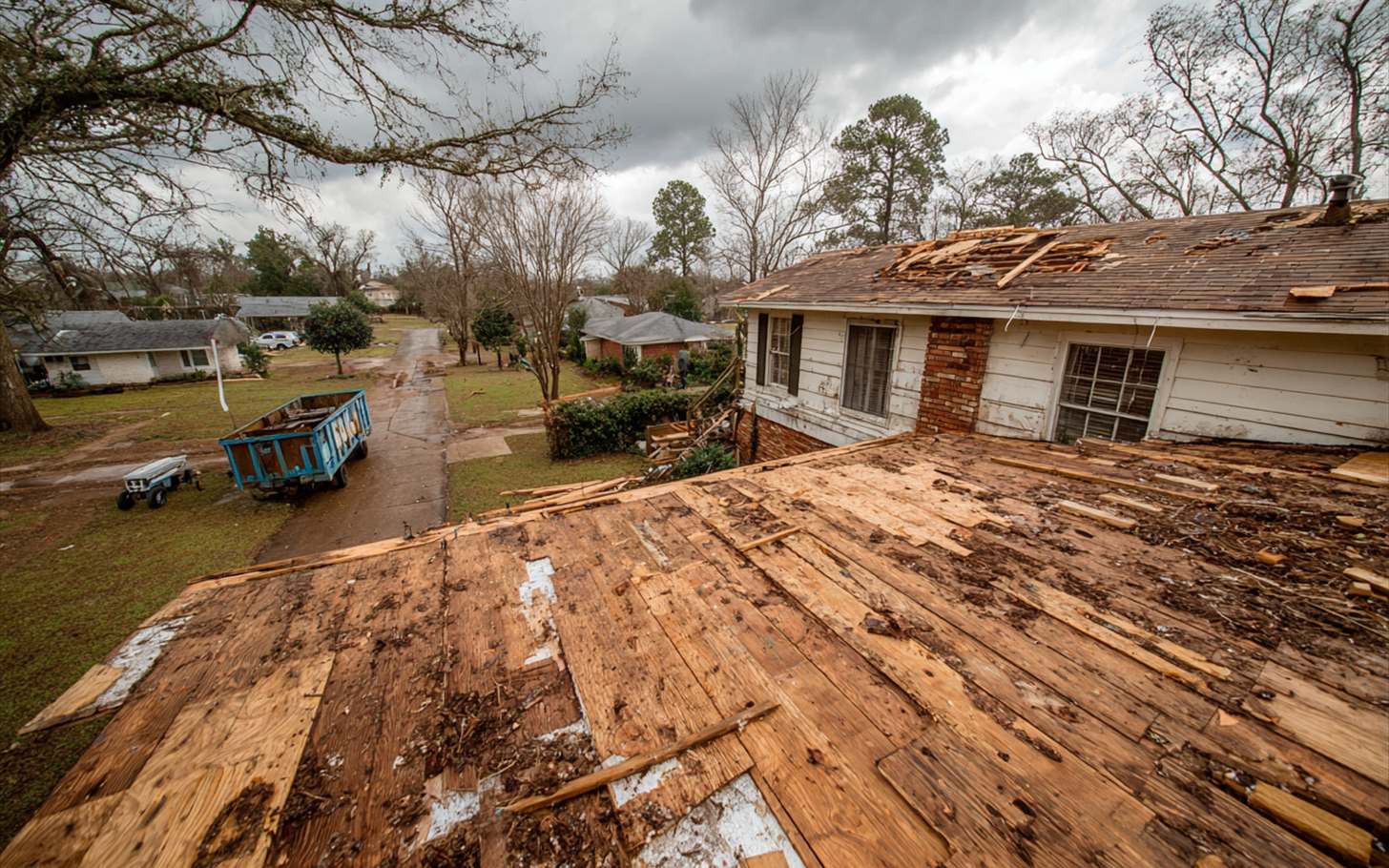
Roof Decking: When the Plywood Has to Go
What sits under the shingles, and how roofers judge it.
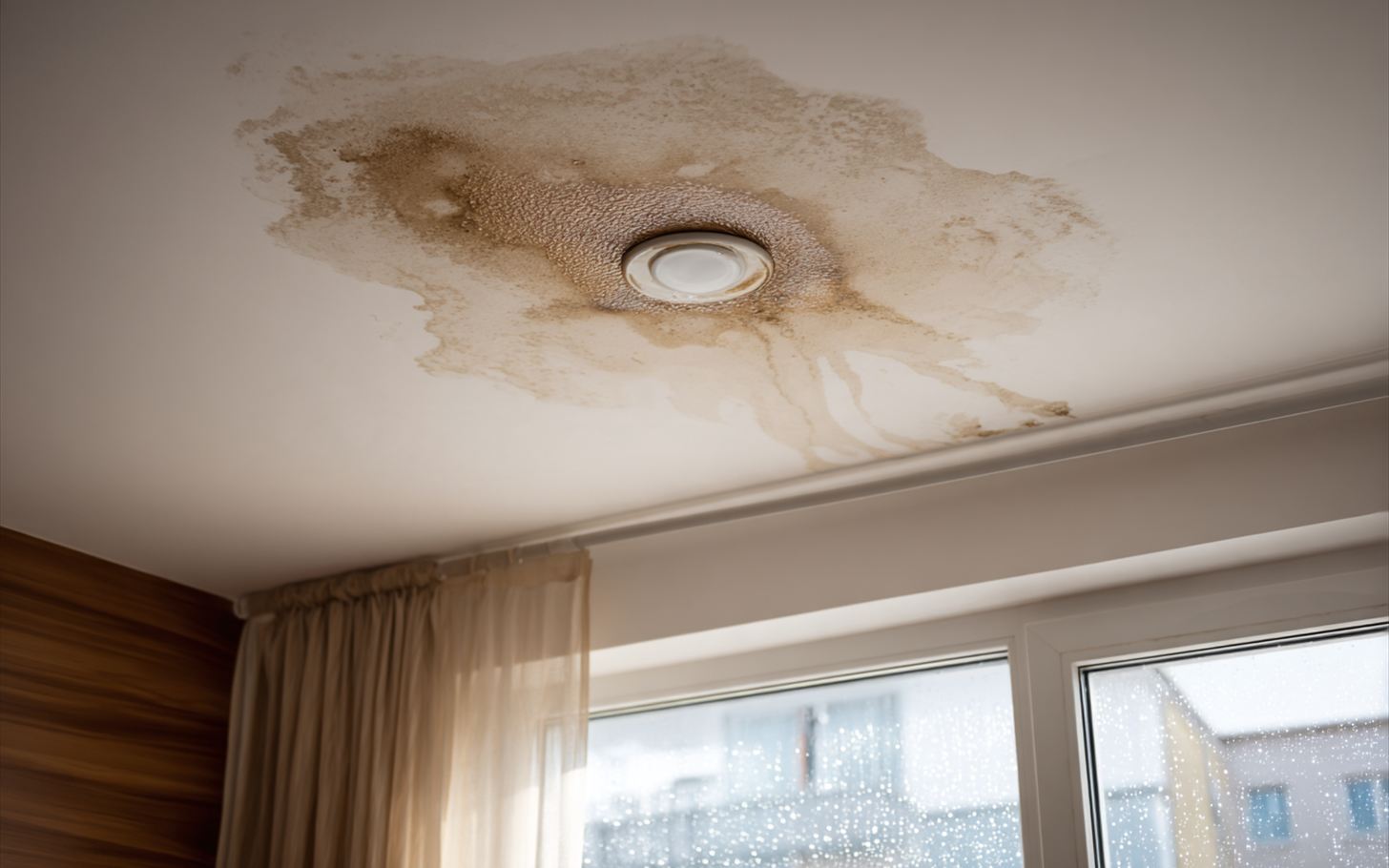
Wind-Driven Rain: Leaks Without a Missing Shingle
When the rain comes in sideways.