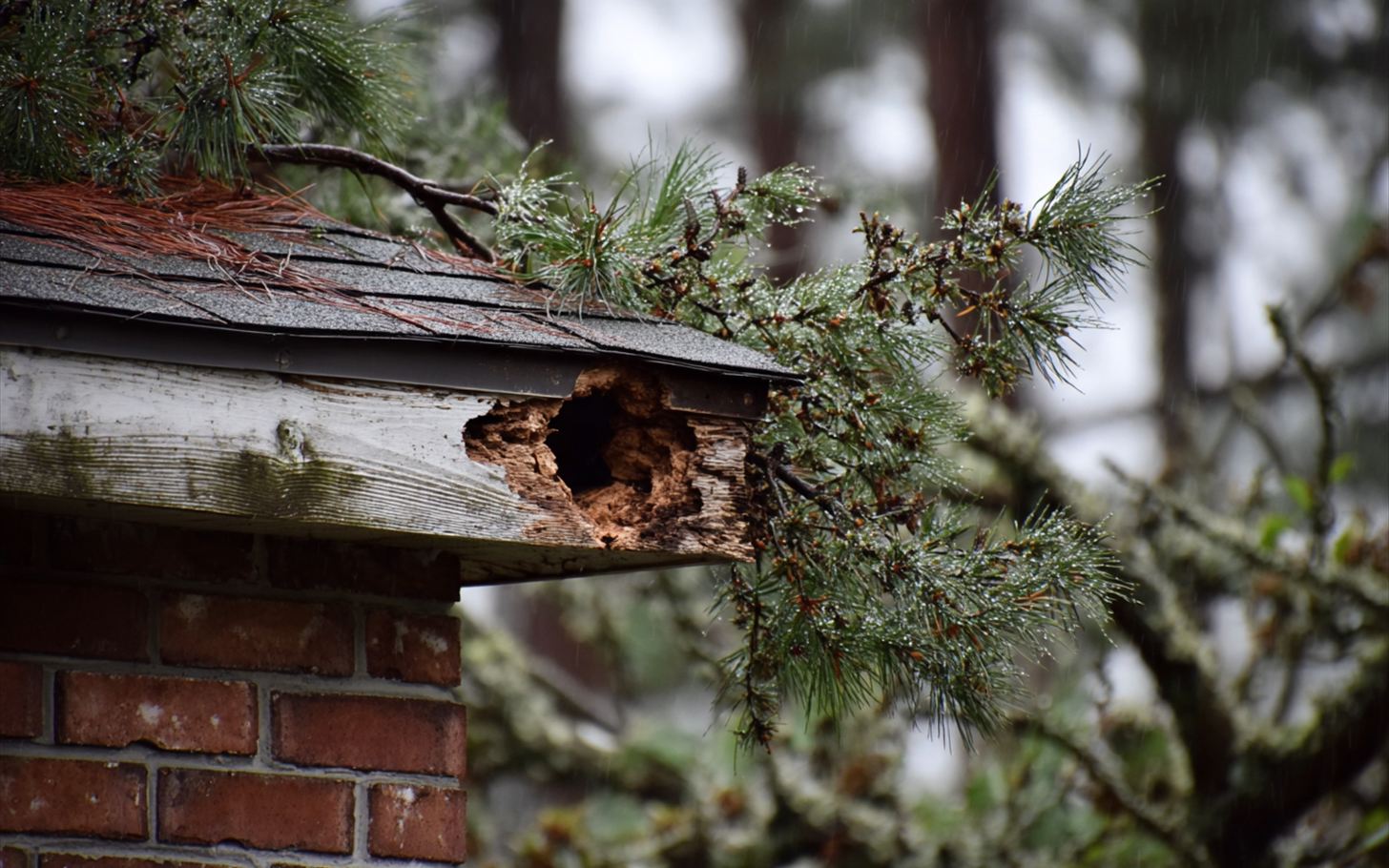
Spring's tall pines and oaks make a highway for animals, and the roof is where that highway ends. Squirrels jump from branches to the eaves, raccoons climb downspouts and trees, and woodpeckers drum on fascia and trim. The damage they leave is small at first: a chewed corner, a lifted vent, a hole in the soffit. Rain follows them in.
What Each One Does
| Animal | Where it gets in | Typical damage |
|---|---|---|
| Squirrels | Roof edges, soffit gaps, gable vents | Chewed fascia corners and vent screens; nests in insulation |
| Raccoons | Weak soffits, roof vents, the joint at a dormer | Torn vents and shingles, crushed insulation |
| Woodpeckers | Fascia and trim boards | Round holes in wood, often in rows |
| Rats | Gaps where roof lines meet | Small holes at the eaves |
Signs on the Roof and in the Attic
Most owners hear the animals before they see the damage. Scratching or running in the attic at dawn and dusk is classic squirrel noise; heavier thumps at night suggest raccoons. From outside, look for:
- chewed or rounded holes at roof corners and along the fascia
- vent covers lifted, bent or torn
- soffit panels pushed up or missing
- shingles torn near a vent or ridge
- nesting material poking out of gaps
From the ground: check the corners of the roof where two eaves meet; that's where squirrels usually chew first.
Ask the roofer: "Are these holes letting water in, or only animals?"
The Order of the Repair
Animals have to be out before anything is sealed. Closing a hole with a squirrel or a litter of young inside leads to new holes and a worse smell. Texas has rules about trapping and relocating some wild animals, and Texas Parks and Wildlife runs an urban wildlife program with guidance for people living alongside them: Texas Parks and Wildlife: Urban Wildlife Program.
Once the attic is clear, a roofing company repairs the entry points:
- Replace chewed fascia and soffit sections with sound material.
- Install sturdy vent covers with metal screening.
- Repair torn shingles and underlayment around vents and ridges.
- Seal gaps where roof lines meet.
- Check the decking and insulation near each opening for water damage.
Keeping Them Off
| Step | Why |
|---|---|
| Trim branches 6–10 feet back from the roof | Squirrels lose their bridge |
| Keep gutters clear | Less nesting material and standing water |
| Use metal vent guards | Harder to chew through |
| Repair soft fascia early | Rotted wood is easy to chew |
Around Spring
Wooded neighborhoods and acreage see the most: The Woodlands, Magnolia, Porter, and golf-course lots in Augusta Pines. Rotted eaves make it easy for them; see gutters, fascia and soffits. For other small roof openings, see roof repair.
Damage You Find in the Attic
Once animals are inside, the roof damage is only part of it:
- insulation flattened, tunneled or torn into nests
- chewed wiring insulation, which is a fire risk worth having checked
- droppings and stains on the ceiling drywall
- ductwork pulled loose or chewed
- water stains where rain followed the animals in
Insulation that's been heavily nested in usually has to be removed and replaced, which is often done after the entry points are repaired.
Season by Season
| Season | What the animals are doing | What to watch |
|---|---|---|
| Late winter and spring | Squirrels and raccoons nesting; young in attics | Noises at dawn and dusk; don't seal holes yet |
| Summer | Young leave nests | Good time to have entry points closed |
| Fall | Squirrels storing food, looking for shelter | New chewing at corners and vents |
| Year-round | Woodpeckers drumming on trim | Rows of round holes in fascia |
From the ground: after a storm, check whether a fallen limb has given animals a new bridge to the roof.
Ask the roofer: "Can you use metal or other chew-resistant material at the spots they already found?"
Questions
Can animals cause roof leaks?
Yes. Chewed vents, torn shingles and holes at the eaves all let rain in, often into insulation where it goes unnoticed.
Will insurance cover animal damage to the roof?
Many policies exclude damage from rodents and some other animals. Check the exclusions in your policy, and ask your agent.
Why do woodpeckers drill into fascia?
They may be hunting insects in the wood, marking territory, or drumming. Damaged or soft trim attracts them more.
Should holes be sealed before or after the animals leave?
After. Sealing a hole with animals still inside traps them, and they usually chew a new way out, often through a better part of the roof. Once the attic is confirmed empty, the entry points are repaired with sound wood and metal screening. In spring, when young are often in the attic, that wait can be several weeks.
Do ultrasonic devices or lights keep animals out?
Results are mixed at best. Closing the entry points and trimming the branches that lead to the roof does far more.
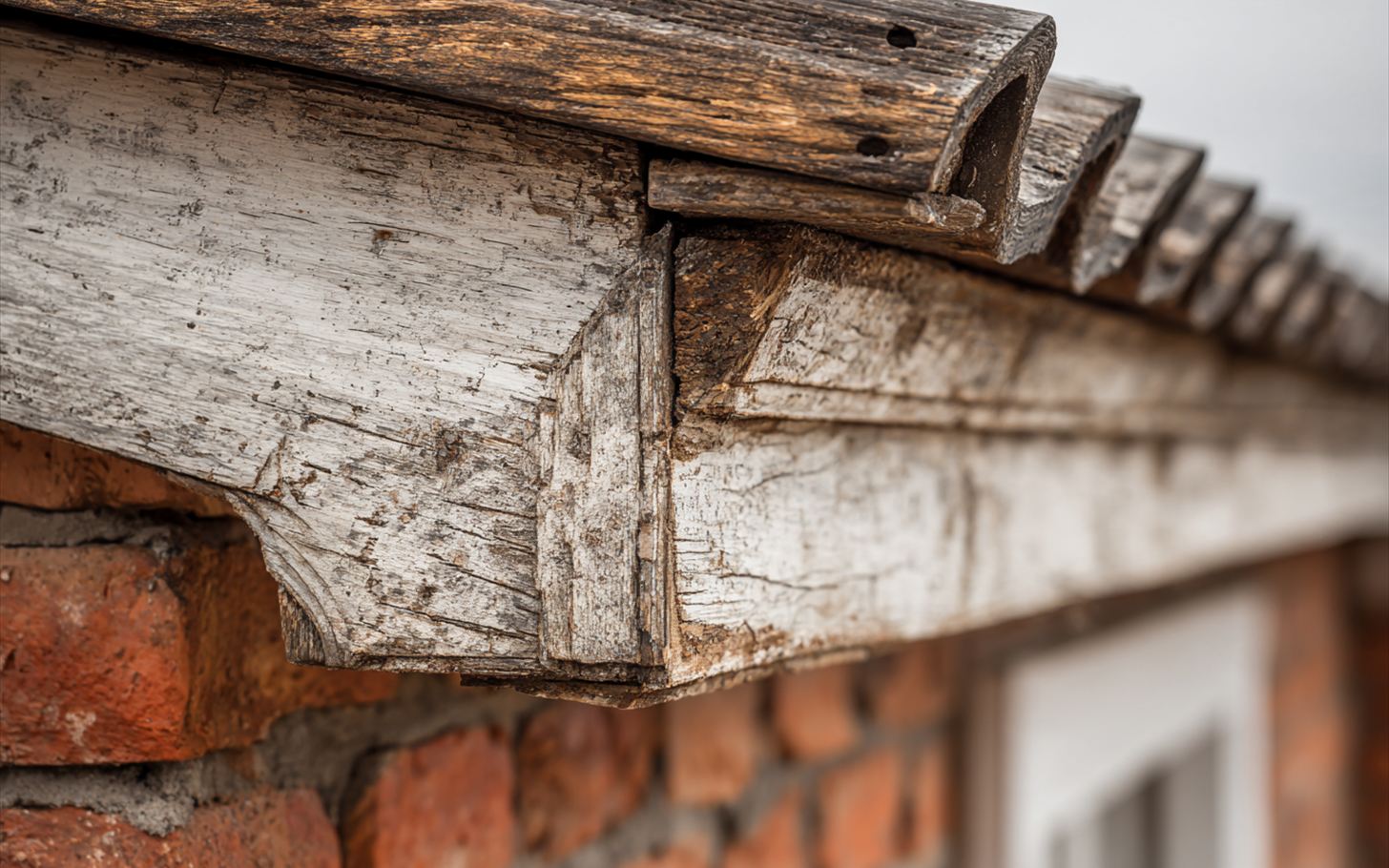
Gutters, Fascia and Soffit Rot Under the Eaves
Where overflowing gutters do their damage.
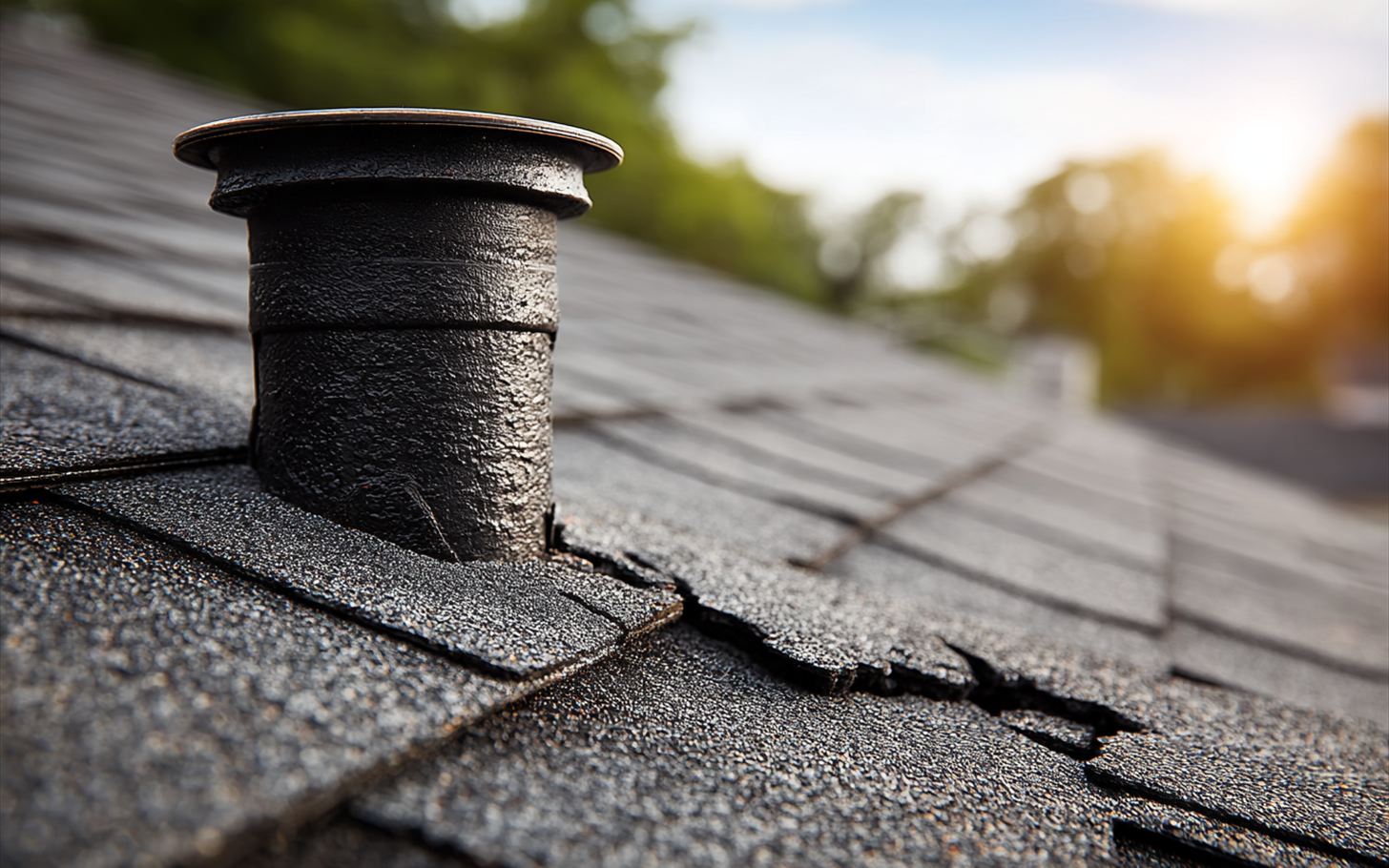
Pipe Boots, Vents and Small Leaks on an Aging Roof
The little parts that fail before the shingles.