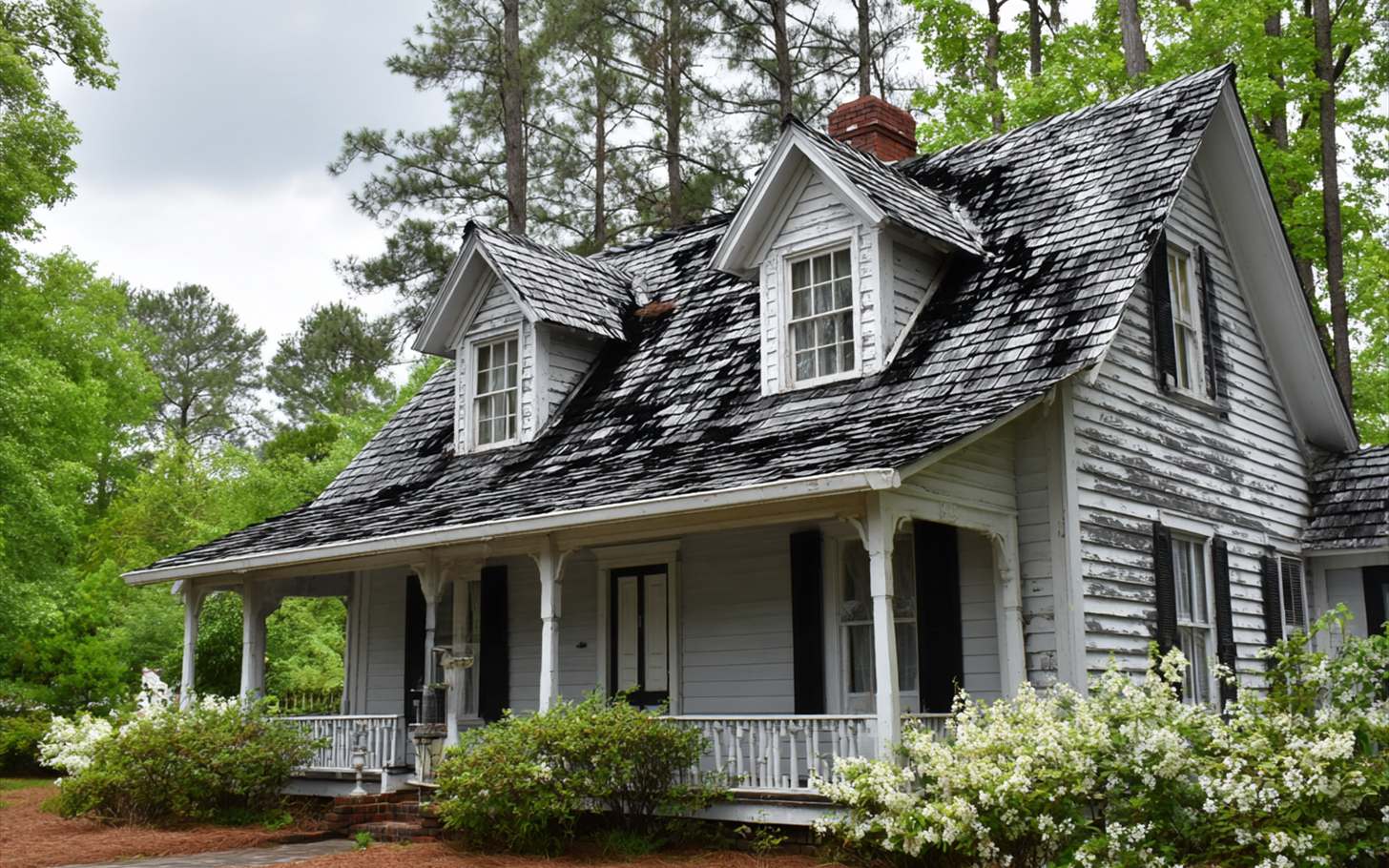
The black or dark-gray streaks running down many Spring roofs are not dirt or soot. They're colonies of a microscopic organism, usually identified as Gloeocapsa magma, that blows from roof to roof and grows where shingles stay damp. In north Harris County's humidity, under pine shade, it does very well.
What It Is
Roof algae is technically a cyanobacterium. It forms a dark protective coating against sunlight, which is why the streaks look black. It spreads by air, so once one roof on a street has it, the others usually follow. The streaks start near the top of a slope and run downhill, following the path rainwater takes.
| Feature | What you see |
|---|---|
| Color | Black to dark gray streaks |
| Where | North-facing and shaded slopes first |
| Shape | Runs downhill from the ridge or a vent |
| Texture | Flat stain; moss, by contrast, is green and fuzzy |
The International Institute of Building Enclosure Consultants has a technical paper on algae discoloration of roofs: IIBEC: Algae Discolorations of Roofs.
Does It Hurt the Roof?
Mostly, the damage is to looks, not to the shingles. Shingle makers generally describe it as a cosmetic issue. Some sources say the algae feeds on the limestone filler in asphalt shingles; that's debated. Where it does cause trouble is indirectly: heavy growth keeps the surface damp, and moss, which often grows alongside it in needle piles, can lift shingle edges and hold water.
Dark streaks also absorb more heat on a summer afternoon, which matters a little on a roof that already bakes.
From the ground: compare the north and south sides of the roof; streaks only on the shaded side are almost always algae.
Ask the roofer: "Is this just staining, or is moss lifting any shingles?"
Cleaning Without Damaging Shingles
The one thing not to do is pressure wash a shingle roof. High-pressure water strips the granules that protect the asphalt from the sun, taking years off the roof. Roofing and cleaning companies use low-pressure application of cleaning solutions instead, rinsing gently. The streaks may take a few weeks of rain to fade fully.
Cleaning also means walking the roof, so it isn't an owner's job, especially on a steep two-story.
Keeping It From Coming Back
| Option | How it works | Best time |
|---|---|---|
| Algae-resistant shingles | Copper-coated granules slow growth | At replacement |
| Zinc or copper strips near the ridge | Rain carries traces of metal down the roof | Any time |
| Trimming branches | More sun, faster drying | Any time |
| Clearing needle piles | Less trapped moisture | Every season |
Most architectural shingles sold for humid climates now include algae-resistant granules. If your roof is due for replacement, it's an easy upgrade to ask for. See shingle roofs.
Where It Shows Up Around Spring
Shady, older neighborhoods with tall trees, like Klein, and lake-side and golf-course streets with plenty of moisture, like Gleannloch Farms and Humble, see it most. Newer roofs with algae-resistant granules stay clean longer.
Algae, Moss and Lichen: Telling Them Apart
| Growth | Looks like | How much it matters |
|---|---|---|
| Algae | Flat black or gray streaks running downhill | Mostly cosmetic |
| Moss | Green, fuzzy clumps, often at shingle edges and in needle piles | Holds water and can lift shingles |
| Lichen | Crusty gray-green or orange spots, tightly attached | Can hold on to granules when removed |
Moss and lichen need more care to remove, because scraping or pulling them can take granules with them. A roofer can judge whether the shingles under a heavy patch are still sound.
What to Expect From a Cleaning
Cleaning solutions are applied at low pressure, left to work, and rinsed gently or allowed to wash off in the next rains. Landscaping below is usually wetted and covered first. The streaks often look lighter at once and fade fully over a few weeks. Without copper, zinc or algae-resistant granules, the growth usually returns within a few years in Spring's humidity.
From the ground: after a cleaning, watch the slope through the next few rains rather than judging it right after the rinse.
Ask the roofer: "Would a zinc or copper strip at the ridge help on this roof?"
Questions
Will the streaks go away on their own?
No. Once established, the colonies keep spreading until cleaned or blocked by copper or zinc.
Can HOAs require roof cleaning?
Some association guidelines ask owners to keep roofs clear of visible staining. Check your association's rules.
Do the streaks mean the roof is failing?
Not by themselves. They do mean the roof stays damp, so it's worth checking for moss and worn shingles at the same time.
Does algae spread from roof to roof?
Yes. It travels through the air, so a street where one roof is streaked usually has more on the way. Algae-resistant shingles or metal strips near the ridge slow it on your own roof regardless of the neighbors.
Pine Needles in the Valleys and Gutters
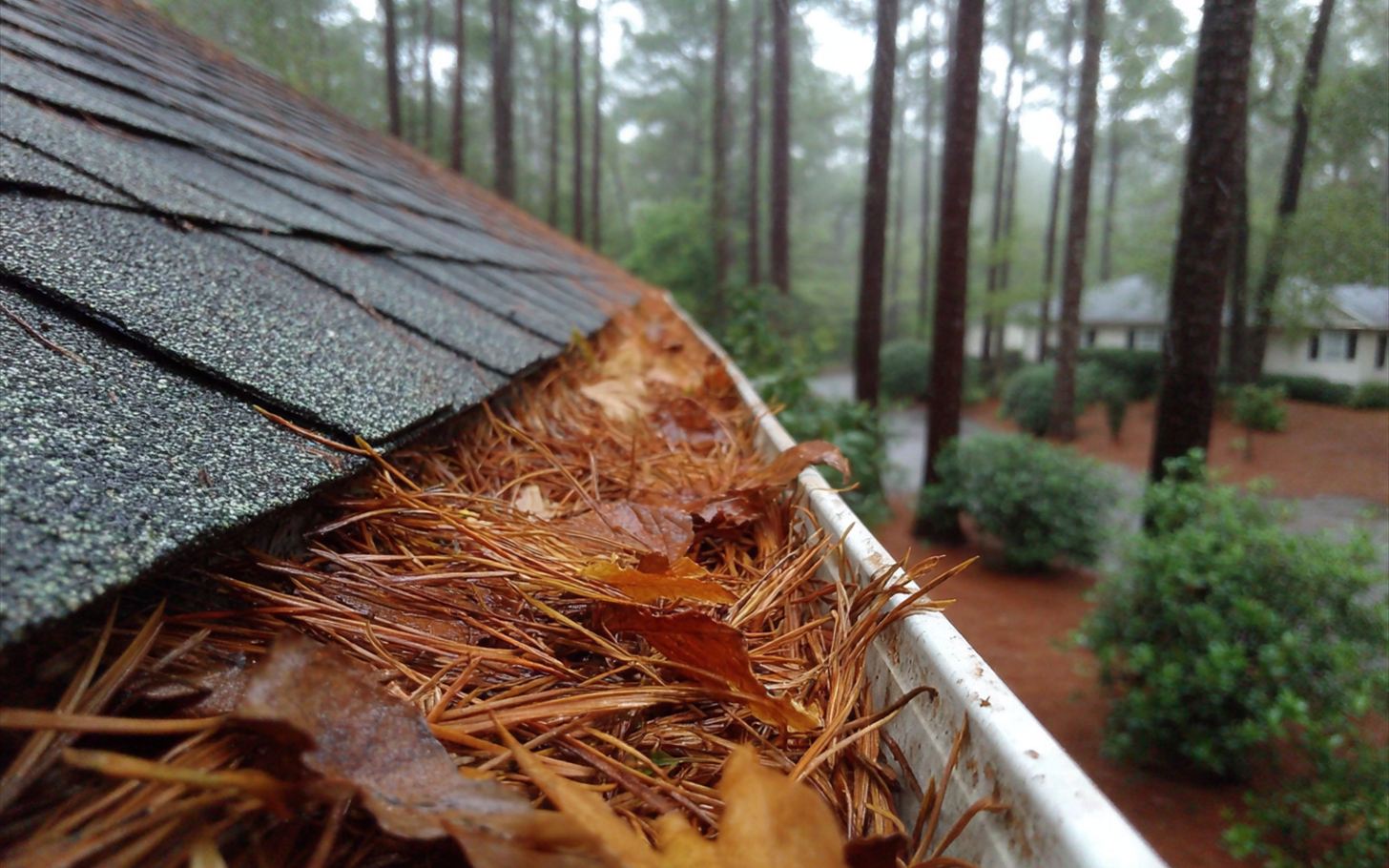
How a soft pile of needles turns into a leak.
Pipe Boots, Vents and Small Leaks on an Aging Roof
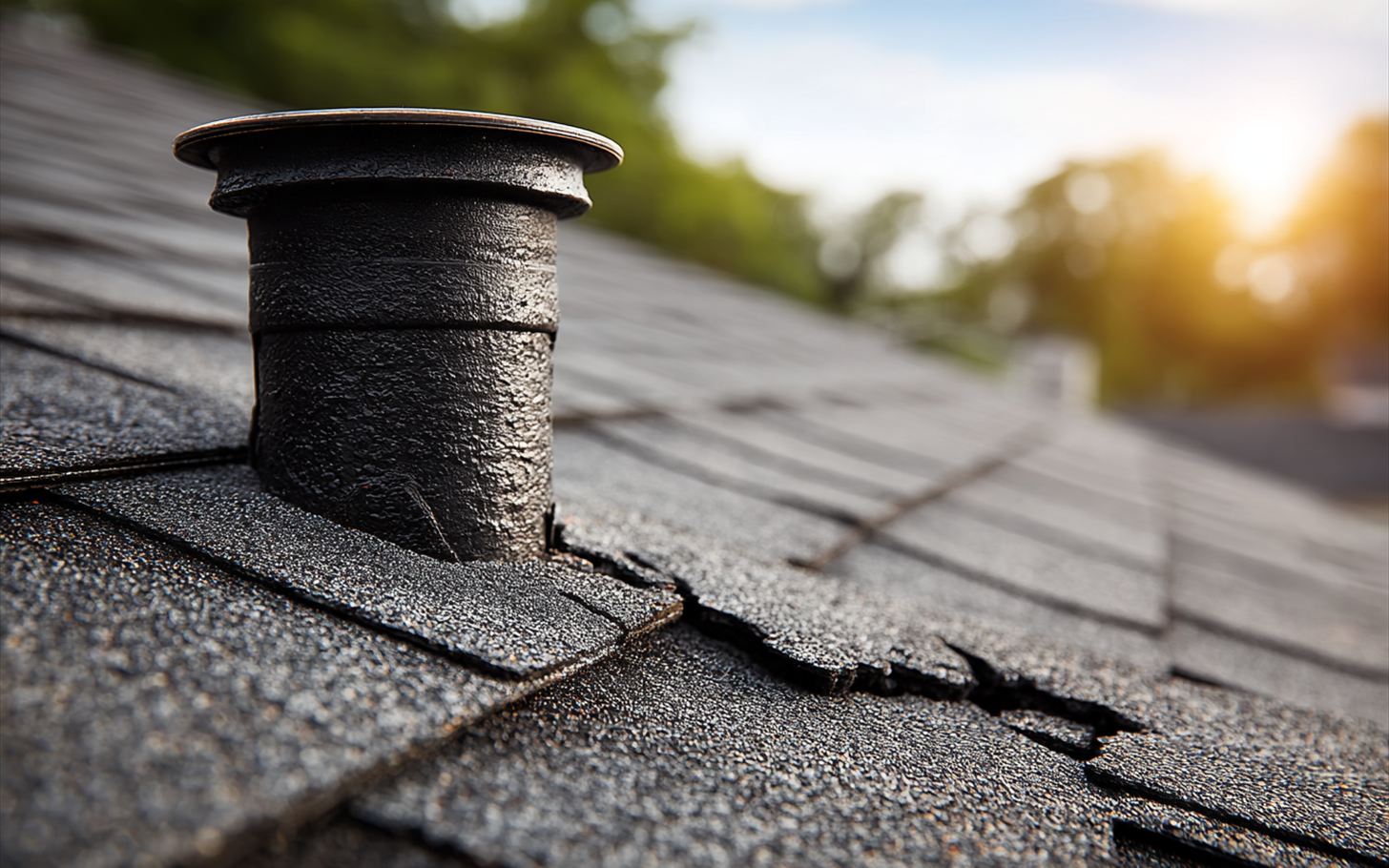
The little parts that fail before the shingles.