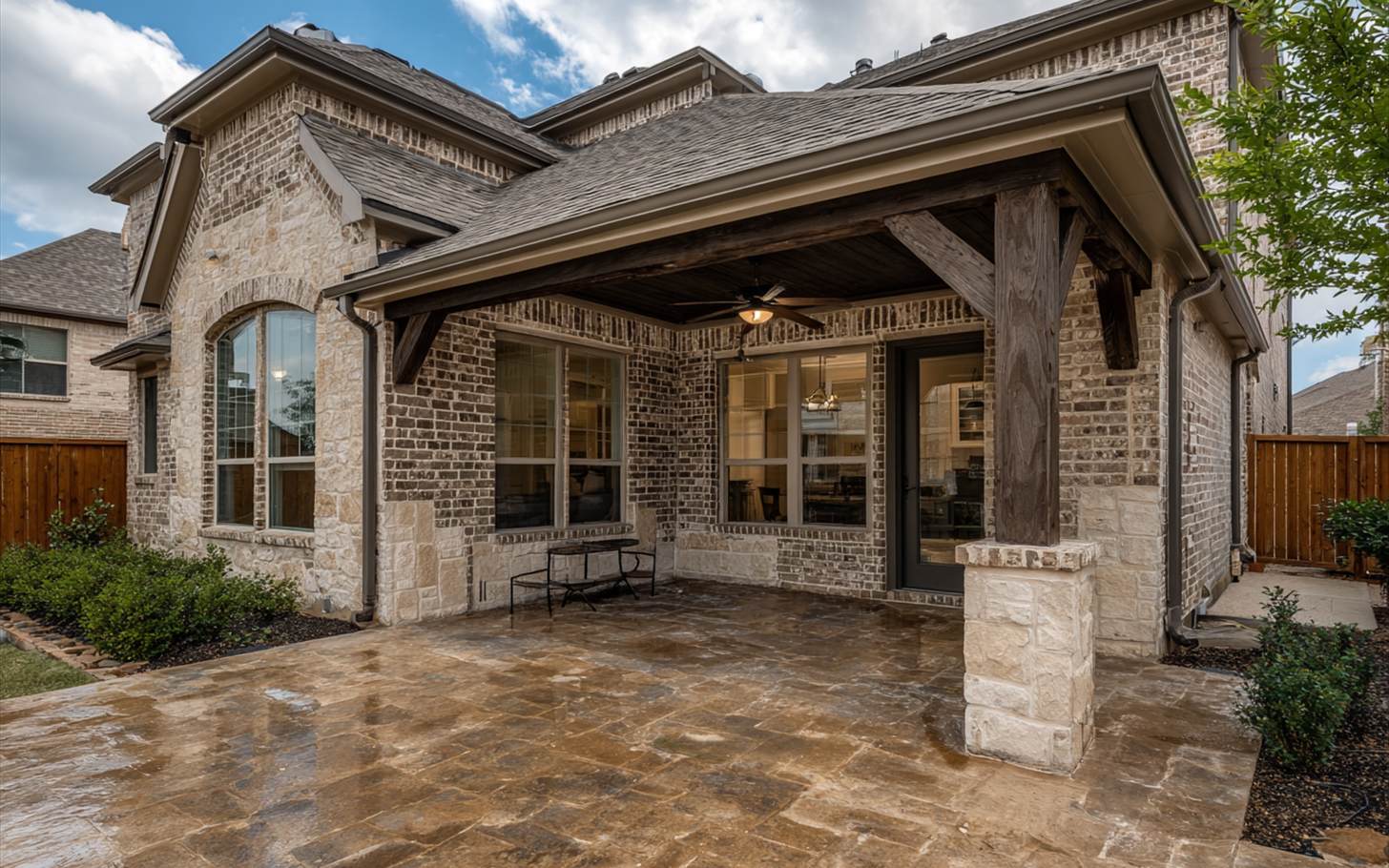
Behind many Spring houses is a roof that looks almost flat: a covered patio, a sunroom, a back-porch addition or a garage extension. These low-slope roofs keep the Texas sun off outdoor living space, and they're also among the most leak-prone parts of a house. Water moves slowly on them, needles pile up, and the joint where they meet the main house is easy to get wrong.
What Counts as Low Slope
Roof pitch is measured as rise over a 12-inch run. Most asphalt shingles need at least a 2-in-12 pitch with extra underlayment, and more for standard installation. Below that, water backs up under the shingles. Many patio roofs are built close to that limit, or below it, which is why shingled patio roofs leak so often.
| Pitch | Typical covering |
|---|---|
| 4-in-12 and steeper | Standard shingle installation |
| 2-in-12 to 4-in-12 | Shingles with special underlayment, or metal |
| Below 2-in-12 | Membrane: TPO, modified bitumen, or low-slope metal |
Membranes
- TPO is a white single-ply sheet with heat-welded seams. It reflects sun and is common on newer patio covers.
- Modified bitumen is an asphalt-based membrane in rolls, torched down or self-adhered. It's common on older additions.
- Low-slope standing seam metal can work on shallow pitches with the right panel and seams.
See metal and low-slope roofs.
From the ground: from an upstairs window, look at the patio roof's surface; you'll see whether it's shingle, membrane or metal.
Ask the roofer: "Is this material right for the pitch of this roof?"
Ponding
Water standing on a low-slope roof for more than a day or two after rain is ponding, and it shortens the life of any membrane. On Spring patio roofs it comes from too little slope, a frame that has sagged, a gutter clogged with needles, or a low corner where the patio roof meets the house. Fixes range from clearing the drain to adding tapered insulation or rebuilding the framing.
The Joint With the House
Most patio-roof leaks aren't in the field of the roof but at the tie-in: where the low roof meets the wall, or where it slides under the eave of the main shingle roof. Water from the bigger roof pours onto the smaller one, and if the flashing isn't lapped correctly, it goes behind the wall or into the patio ceiling.
| Tie-in | Common problem |
|---|---|
| Patio roof against a wall | Missing or reversed counter flashing |
| Patio roof under the main eave | Water from the main roof dumps onto the seam |
| Addition roof into a valley | Too little room for proper flashing |
From the ground: stains on the patio ceiling nearest the house point to the tie-in.
Permits and Additions
A new patio cover or addition may need a permit and, in a master-planned community, association approval. Where a permit is required depends on the address: unincorporated Harris County handles permits through the county engineer, while cities like Tomball and Conroe have their own. Harris County Office of the County Engineer.
Around Spring
Covered patios are nearly universal in newer neighborhoods like Harmony and in Cypress, while Old Town Spring has older buildings with low-slope rear additions. Needles from nearby pines make ponding worse; see gutters and fascia.
Keeping a Patio Roof Healthy
Low-slope roofs need a little more attention than the main roof:
- Clear needles and leaves from the surface and drains after the spring and fall drops.
- Look for water still standing two days after a rain.
- Check the patio ceiling for new stains, especially along the house wall.
- Keep ceiling fans, lights and speakers sealed where they pass through the roof.
- Have the seams and tie-in checked whenever the main roof is serviced.
| Season | What to check |
|---|---|
| Spring | Needles and pollen on the surface; drains |
| Summer | Blistering or cracking in the heat |
| Hurricane season | Edges and flashing after each storm |
| Winter | Ponding during long, slow rains |
Questions
Can a patio roof be shingled?
Only if the pitch is steep enough for the shingle maker's low-slope requirements. Below that, a membrane or metal is the right choice.
Why does my patio ceiling leak only in heavy rain?
Heavy rain pours more water off the main roof onto the joint, overwhelming flashing that copes with light rain.
How long does a TPO patio roof last?
Properly installed, many years, but the seams and the tie-in need checking, especially under pines.
Can a patio roof be tied into a new main roof?
Yes, and a reroof is the best time to rebuild that joint. With the old shingles off, the roofer can run new flashing and underlayment from the main roof down over the patio roof's edge, so water from above lands on top of the lower roof instead of behind it. Ask for the tie-in to be listed in the scope.
Gutters, Fascia and Soffit Rot Under the Eaves
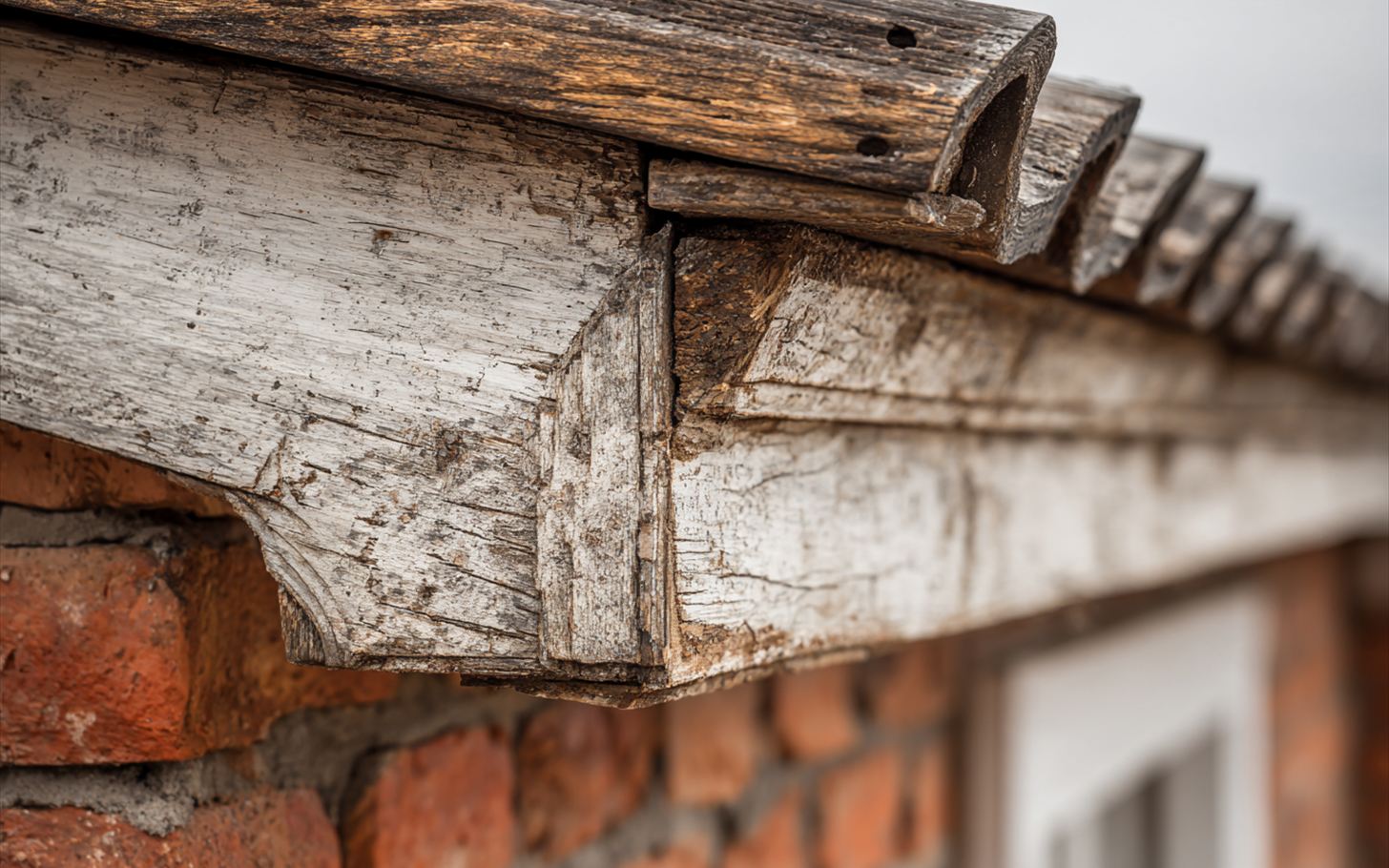
Where overflowing gutters do their damage.
Squirrels, Raccoons and Woodpeckers on the Roof
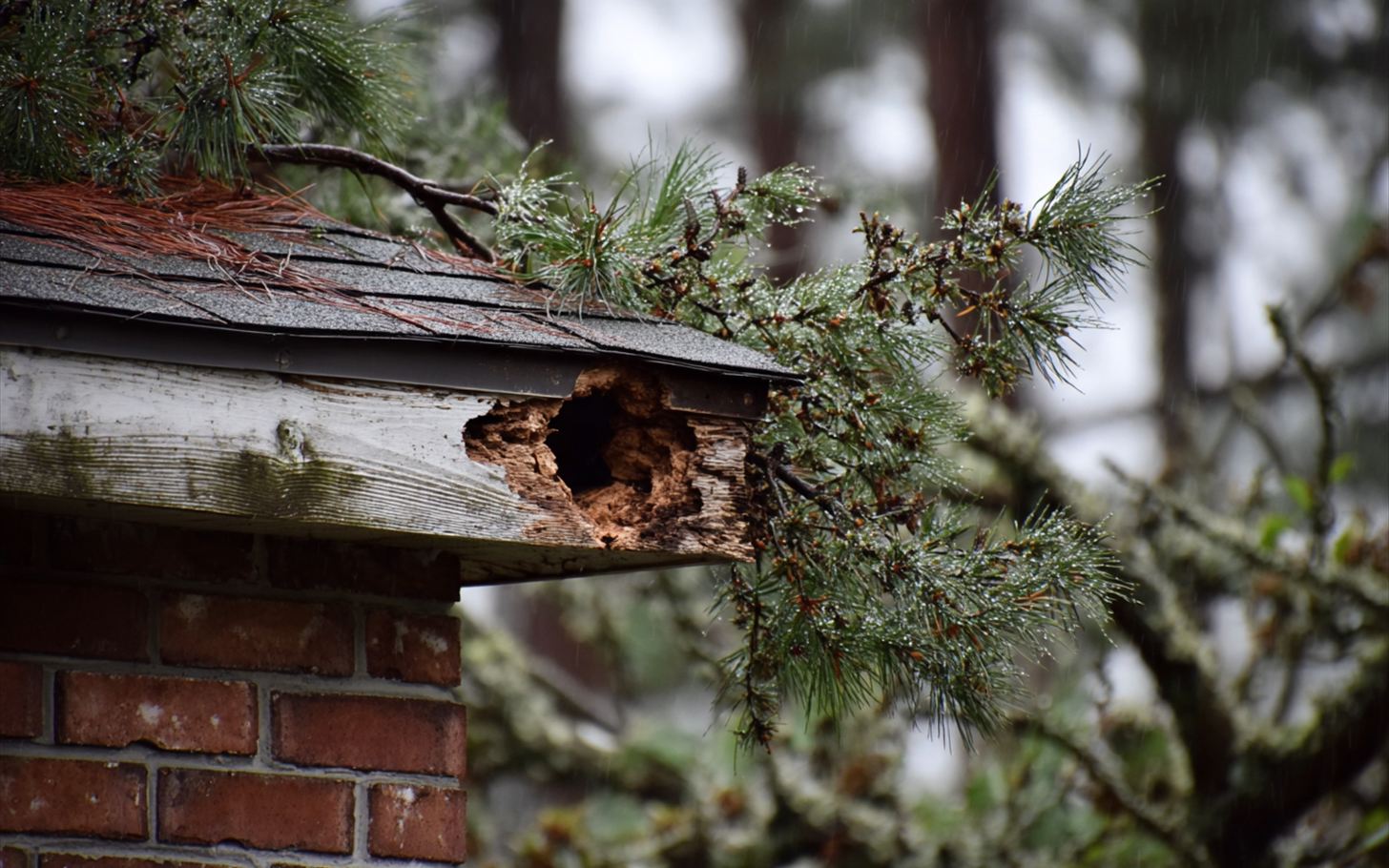
Holes at the eaves, chewed vents and noises in the attic.