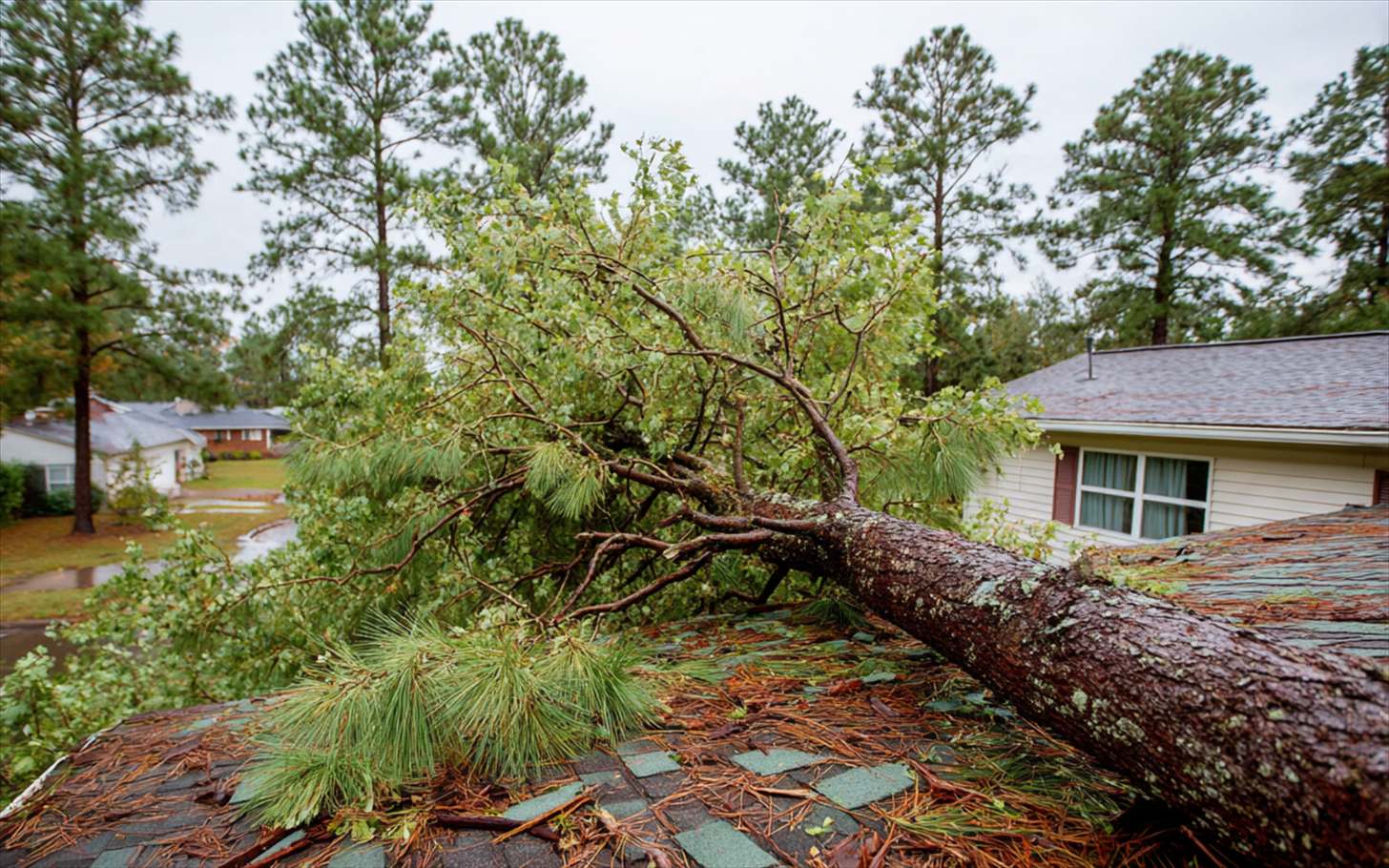
Hurricane Beryl came ashore near Matagorda early on July 8, 2024, and spent the rest of the day crossing southeast Texas. By the time it reached Spring it was no longer a hurricane, but it still brought hours of strong wind and heavy rain. For many Spring houses the damage came from above: pines and limbs that had stood for decades finally came down on roofs.
What Beryl Brought to Spring
The National Weather Service office in Houston/Galveston recorded Beryl's landfall as a Category 1 hurricane, with peak sustained winds over the water around 80 mph. Inland, the wind dropped but lasted. Community Impact reported gusts near 58 mph in Spring, and power stayed out across the Houston area for days, for some households more than a week.
| Beryl in Spring | |
|---|---|
| Date | July 8, 2024 |
| Landfall | Near Matagorda, early morning, Category 1 |
| Spring gusts | Near 58 mph (reported) |
| Main roof damage | Fallen pines and limbs, lifted shingles, wind-driven rain |
The NWS summary of the storm is here: NWS Houston/Galveston: Beryl summary (PDF).
Why the Trees Came Down
Loblolly pines grow tall and fast, with most of their weight high in the crown. Beryl's own heavy rain softened the ground, and long hours of steady wind rocked trees back and forth until roots let go or trunks snapped. Neighborhoods with the tallest, oldest trees took the most. ABC13 reported residents of the Timber Lane subdivision still in early recovery days later, with trees resting on homes. Reporting at the time, citing Texas A&M Forest Service, estimated that about half of the Houston area's trees took some damage.
When a Tree Lands on the House
The roof is only one layer of the damage. A falling trunk or heavy limb can:
- break or split rafters and trusses
- crack or punch through the decking
- tear shingles and underlayment across a whole slope
- crush gutters and fascia at the edge
- let rain into the attic insulation and the ceilings below
The repair runs in order. The tree comes off first, carefully, because cutting it the wrong way can drop more weight on weakened framing. Then a roofer covers the opening with a tarp or plywood to stop more water. Once the framing is checked and repaired, the decking is replaced and the roof is rebuilt in that area, or across the whole roof if it was near the end anyway. See wind and tree damage.
From the ground: photograph the tree on the roof from several sides before anyone moves it.
Ask the roofer: "Do the rafters need repair before you can roof over this?"
Damage Beryl Hid
Not every Beryl repair was obvious. Wind that didn't tear shingles off often broke their seal strips, leaving tabs loose to lift in the next storm. Smaller branches scraped granules away as they blew across. Rain pushed sideways under shingles and around vents. Some owners only found the damage months later, as a stain overhead after an ordinary thunderstorm. See wind-driven rain.
Getting Ready for the Next One
Texas A&M Forest Service publishes guidance on judging storm-damaged trees and working safely around them: Texas A&M Forest Service: After the Storm. Between storms, owners in Timber Lane, Kingwood and The Woodlands can cut the risk:
- Have dead or leaning trees near the house looked at before hurricane season.
- Keep branches trimmed back from the roof.
- Keep gutters and valleys clear, so the roof sheds water if shingles are loosened.
- Know where your policy papers and the roof's age are written down.
The Day After a Hurricane
- Walk around the house and photograph each side, the roof from the ground, and any fallen trees.
- Check ceilings upstairs and in the garage for stains or drips, and put buckets under anything wet.
- Look in the attic with a flashlight if you can do it safely, for daylight or wet insulation.
- Write down the date, the time the wind was worst, and when you first noticed damage.
- Keep receipts for tarps, buckets and anything else you buy to protect the house.
Questions
Does homeowners insurance cover a tree that falls on the house?
Generally, damage to the house from a falling tree is covered by a standard homeowners policy, subject to the deductible. Removing a tree that fell without hitting anything is often limited. Check your own policy.
How soon should a tree-damaged roof be covered?
As soon as it's safe. Insurers expect owners to take reasonable steps to prevent more water damage, and a tarp or plywood cover does that.
Can a roof be repaired just where the tree hit?
Often, if the rest of the roof is in good shape and matching shingles are available. If the roof was already old, many owners replace it.
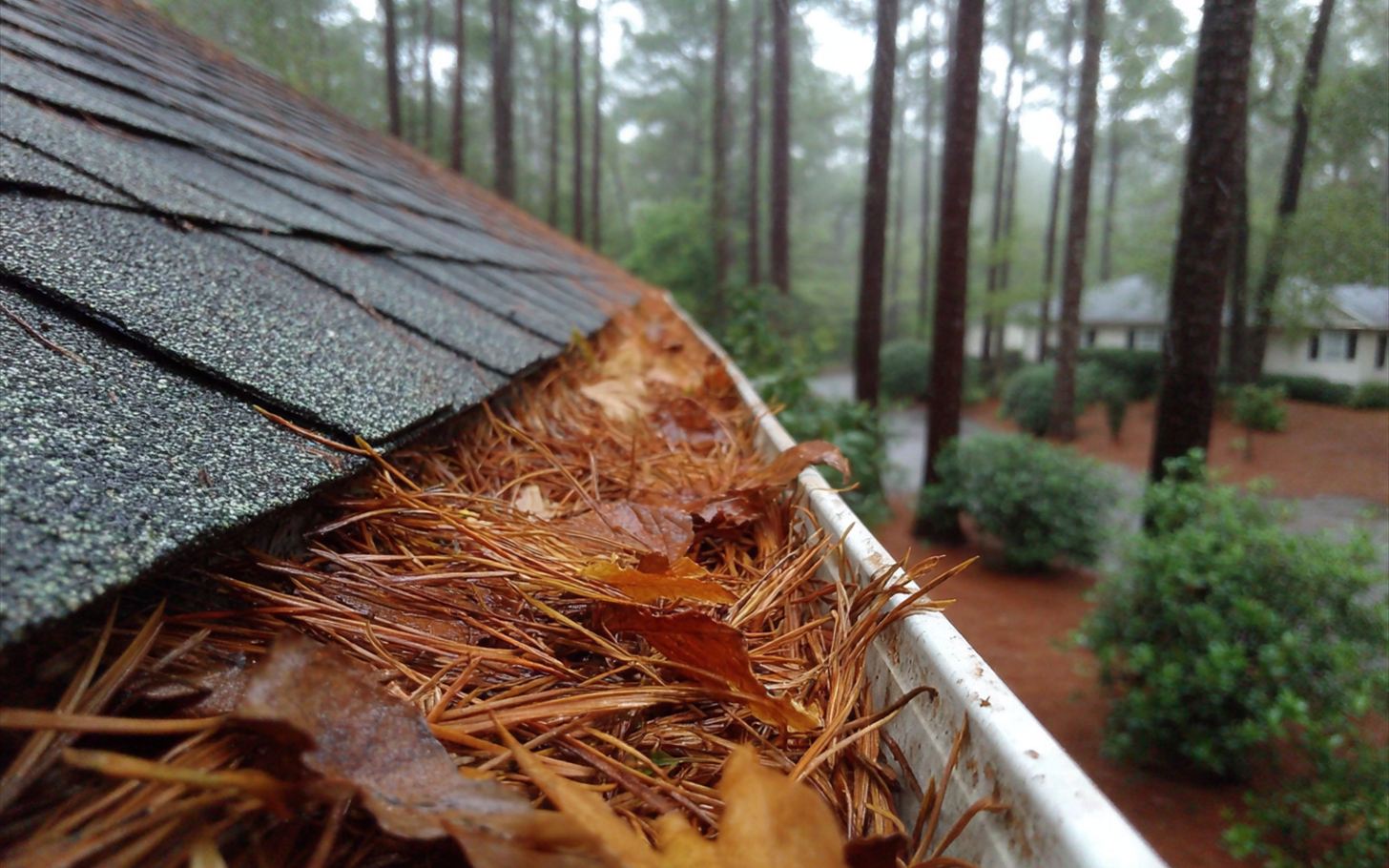
Pine Needles in the Valleys and Gutters
How a soft pile of needles turns into a leak.
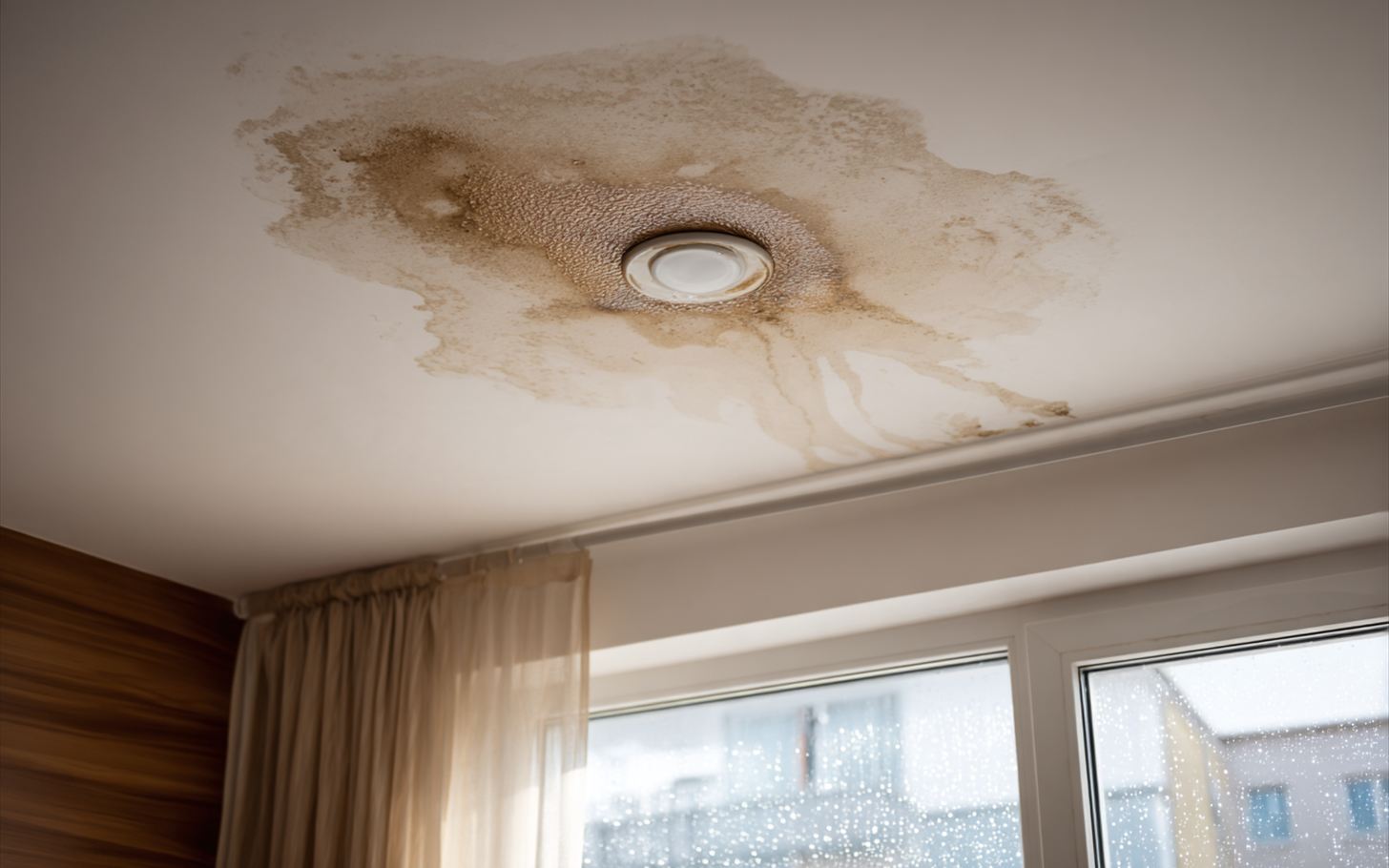
Wind-Driven Rain: Leaks Without a Missing Shingle
When the rain comes in sideways.